I didn’t grow up thinking, “I’m going to paint snakes and fish one day.”
I grew up in a small town in Ohio in a typical Midwestern tract home. Except it didn’t stay typical for long, because of my amazing parents.
My engineer dad was the builder. My artist mom was the decorator. Both were great with their hands and had a keen eye for detail. Together, they took the standard house I grew up in and made it unique, hand-crafted, and special. They were creative problem-solvers who made things better than they found them through craft, care, and their own two hands. And they were lifelong learners—curious and interested until the day they died.
I didn’t realize it at the time, but they shaped the way I see the world: you can improve things. You can take ordinary materials and make something special and beautiful. And you can improve yourself, too. Curiosity and creativity are practical tools for solving problems.
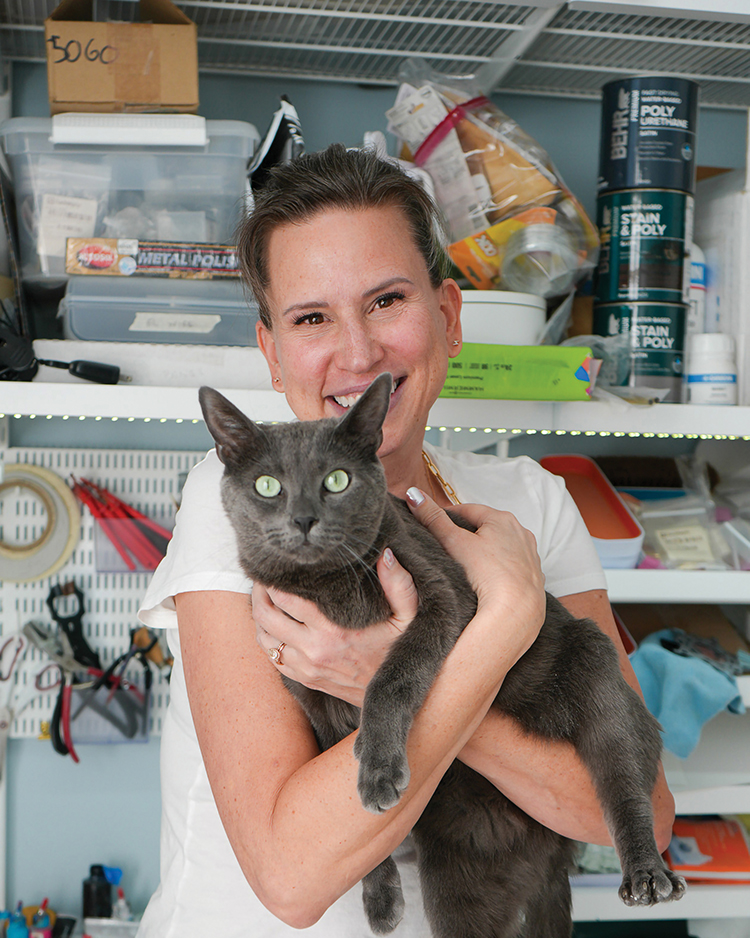
My creative path hasn’t been linear. It’s been defined mostly by curiosity and a desire to experiment. I’ve always had an artistic streak, but it didn’t lead me straight into fine art.
I decided at age 8 that I wanted to be a graphic designer. After graduating from college with a graphic design degree, I spent a couple of decades in Los Angeles, first working in print advertising and later as a web and interface designer. I got involved in web design early, back when the internet still felt like a frontier. That experience taught me something valuable: when you do something that’s never been done before, nobody knows more about it than you.
There isn’t a script. There aren’t hundreds of people ahead of you doing it better. There are just your ideas, your experiments, and your willingness to keep learning as you go. That lesson is what paved the way into finding my unique niche as an artist.
But before that happened, I hit a wall.
After years in design, I burned out. I was divorced, unenthusiastic about my career, and felt like I’d hit a dead end. I wanted a second act, but I didn’t know what it should be.
Around that time, I reconnected with an old friend in Denver. We started dating. He proposed. I said yes to him—and to the idea of starting over.
Moving to Denver gave me something I hadn’t had in a long time: space. For the first time, I could ask what felt meaningful, not just what I already knew how to do or what would look good on a résumé.
The answer didn’t come immediately. I tried jewelry-making, sculpture, various painting mediums, and leatherwork. I adapt easily, and I genuinely love learning, so curiosity became my compass. I paid attention to the parts I enjoyed most and let them lead me.
During the pandemic, I became obsessed with hand-stitching leather handbags. I fell in love with leather as a material—its texture, tactile richness, and the way exotic skins in particular carry so much variation and visual history.
After a few years, though, the constraints of functionality started to feel limiting. I decided to pursue non-functional fine art instead. But I wanted to keep working with leather as my medium.
Pretty quickly, an ethical discomfort started tugging at me.
I found myself sitting with a hard question: Do I actually feel good about using something else’s skin as my art medium? If durability and functionality were no longer part of the equation, could I really justify it?
I couldn’t ignore that I didn’t feel 100 percent great about it.
When something doesn’t feel right, I research until I figure it out. That’s when I learned about leather made from invasive animals, first Burmese pythons, then lionfish and carp. These animals were moved by humans into ecosystems where they don’t belong, and now they’ve taken over, causing serious damage.
Lionfish are devouring the native reef fish that keep Caribbean coral reefs alive. Burmese pythons have decimated wildlife in the Florida Everglades. Invasive carp are pushing out native species across the Mississippi River system. All three were introduced by humans. None of them belong where they are now.
I remember thinking: We did this. We moved them. People created this mess.
And then another thought followed immediately: What if my art could help clean it up?
That question marked the turning point.
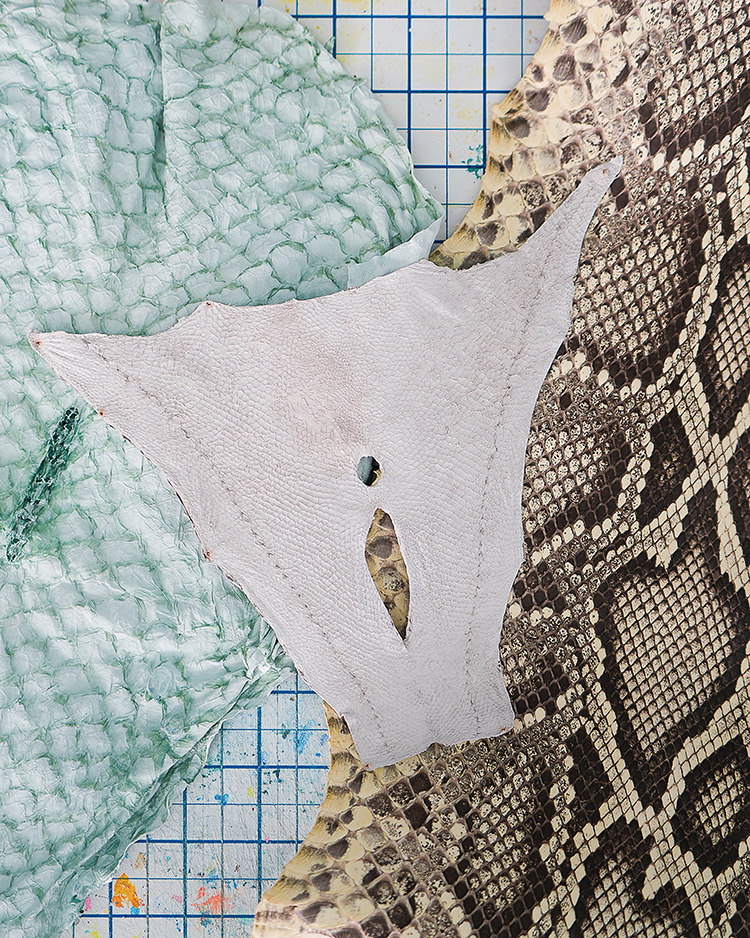
I discovered INVERSA, a regenerative leather company that works with invasive lionfish and carp, sourcing from hunters and fishers who remove these animals from the wild. I also connected with Amy Siewe, a professional python hunter in Florida who tracks, captures, skins, and sends pythons to a tannery for processing into leather. By the time the materials reach my studio, they’re tanned, safe, and ready to use, but their origin story is very different from typical hides.
These animals must be removed so ecosystems can recover. The choice isn’t between leaving them alone or using them for art; it’s between allowing them to continue growing and harming ecosystems unchecked, or removing them, then honoring and repurposing what remains.
That was the moment I found my niche.
If you own my artwork, the materials on your wall used to be destroying an ecosystem. Now they’re making your space prettier—and that ecosystem has a chance to recover.
Here’s why that matters to me: the world is heavy. People are saturated with urgency, information, and crisis. Most of us want to help, but our lives get in the way. We’re too busy or too overwhelmed. We take on more awareness without being able to act on what we’re learning about.
I didn’t want to make work that adds to that burden. I didn’t want to make art that requires the viewer to care about yet another problem they can’t solve.
I wanted to make art that offers a refuge, without pretending that nothing is wrong.
In my practice, the material is the intervention. The ecological story and impact are embedded in the substrate. Learning about them is optional. A collector can simply choose the work for its beauty, and that’s enough. Regardless of what drew them to the work, they’ve participated in the solution.
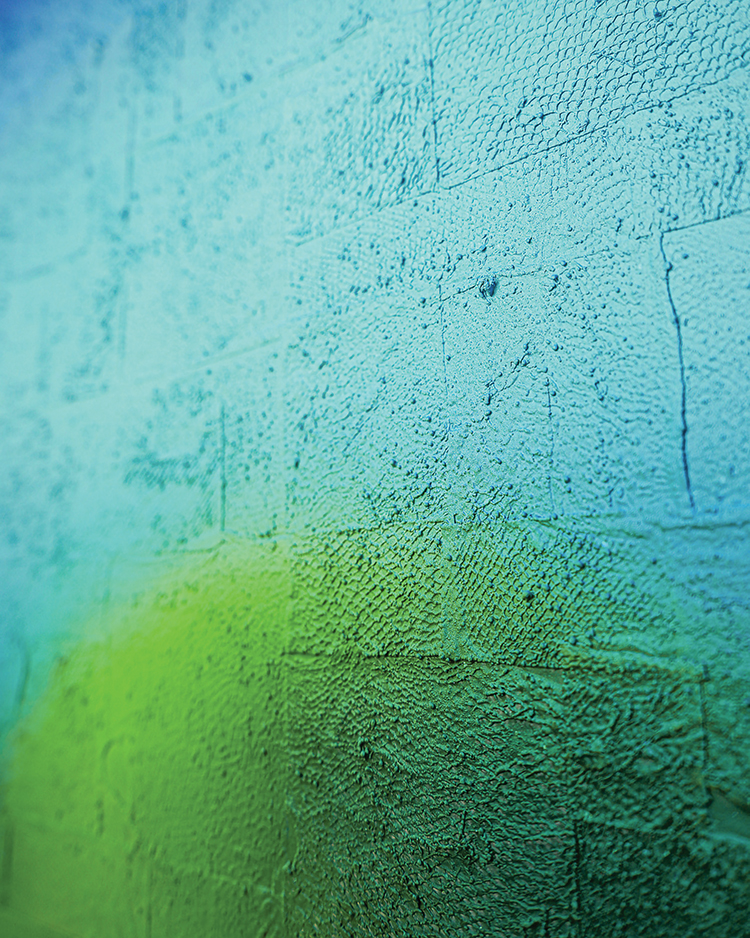
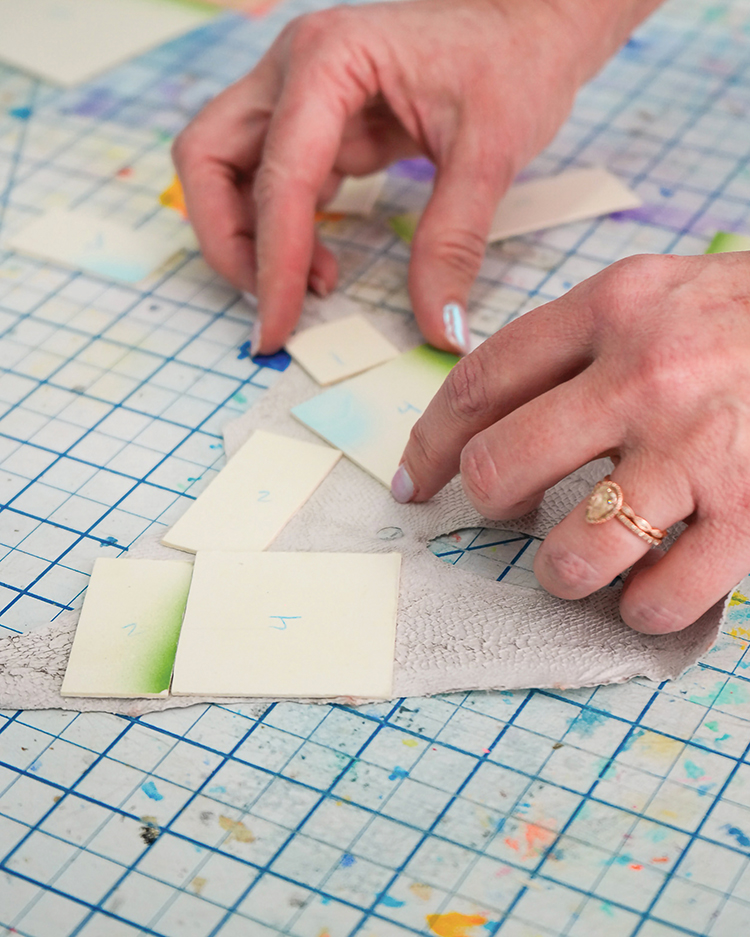
My studio is filled with these materials, each with its own personality. Lionfish skin has tiny scale pockets that catch paint in a fine, almost net-like way. I can pool one color of paint into the recesses, and rub a different color onto the raised surface, highlighting the texture. Carp skins have bigger, deeper scale pockets that give paintings dimensionality and look almost topographic. Python skin has bold, graphic scales that are already a recognizable pattern before I begin, so the challenge is to layer color and abstraction on top of that pattern in a way that creates surprise.
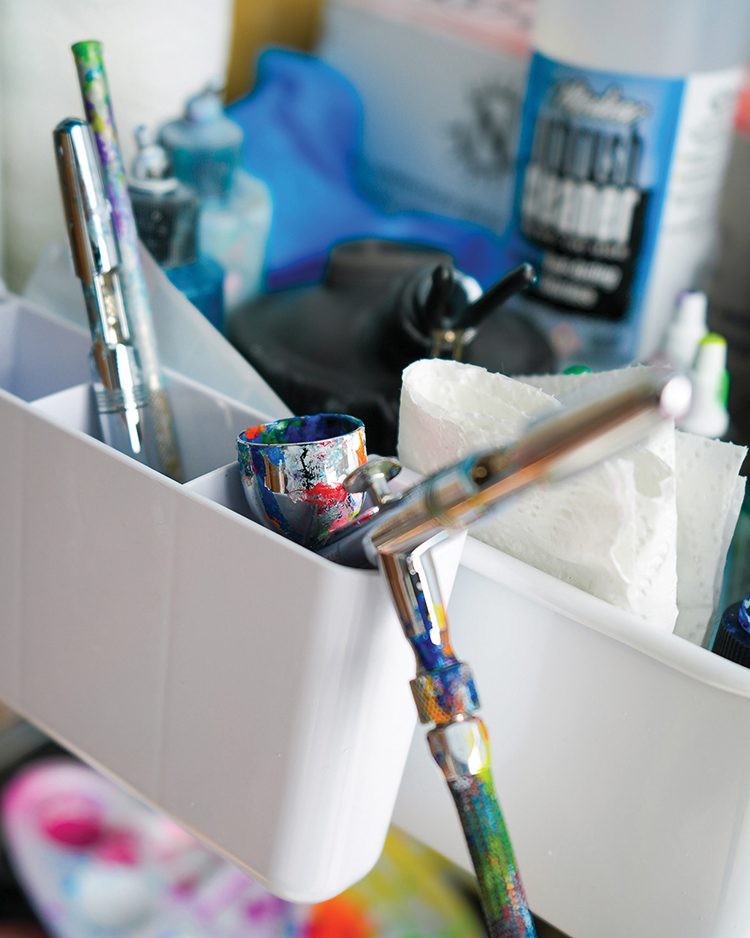
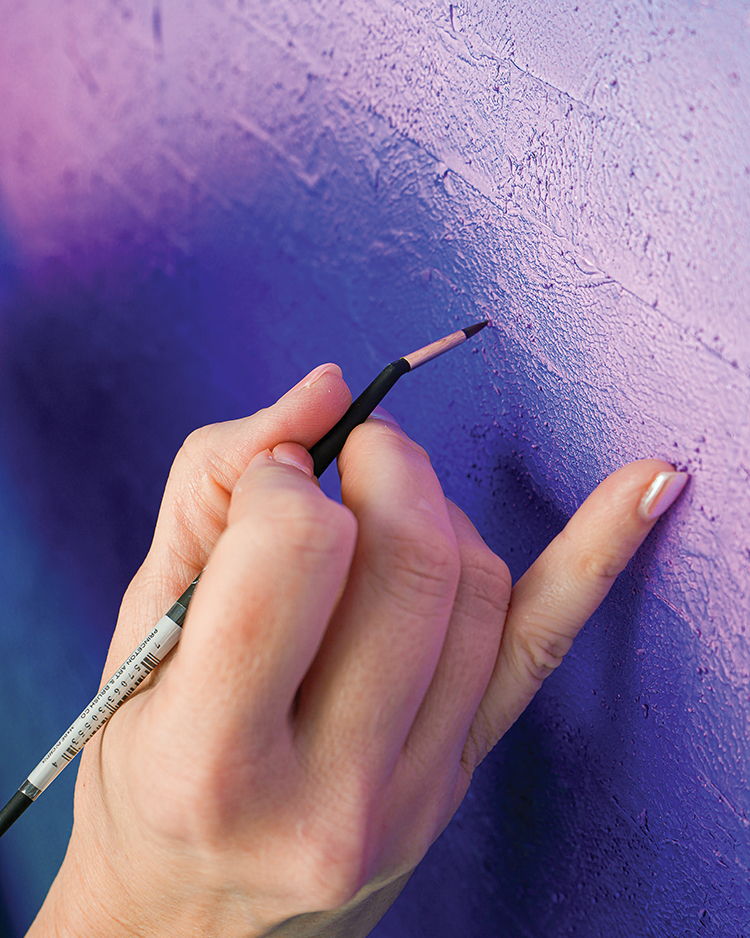
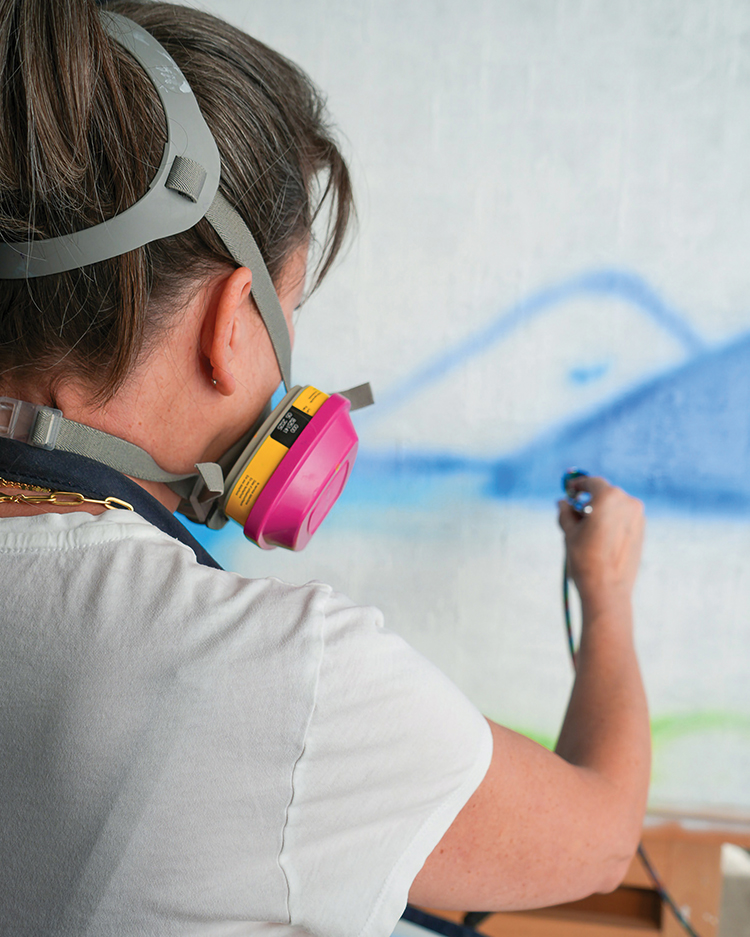
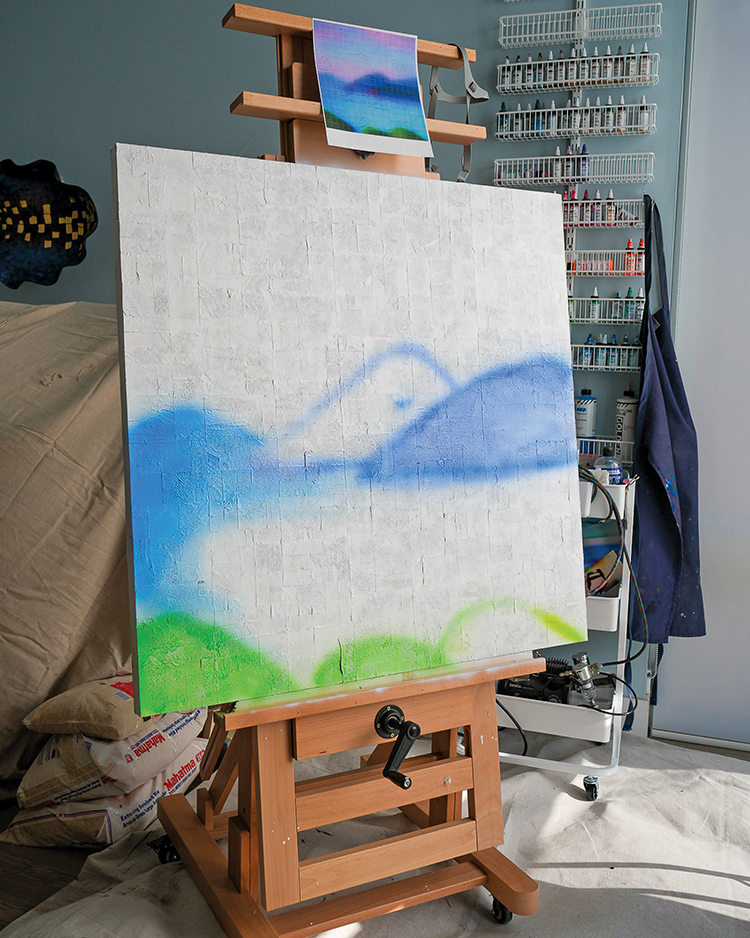
I cut these leathers into pieces, then glue them to cradled wood panels or artboards. I build my paintings in layers of acrylic applied mostly with
an airbrush, tiny paintbrushes, and my fingertips. I use vivid colors—sunset oranges, sea-glass blues, fluorescent pinks and greens—creating soft glows. The stories behind these materials are heavy, so I keep the work uplifting. I want the work to feel restorative. I want it to change the feeling of a room.
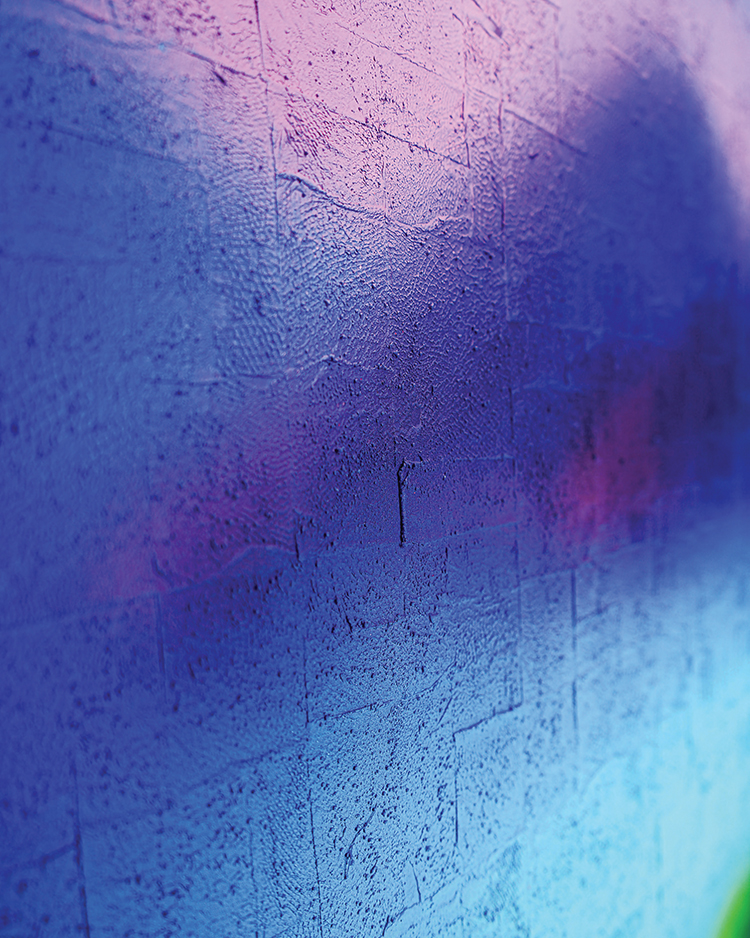
That moment when someone sees a piece and says, “That’s gorgeous—what is it?” is my favorite part. I get to answer, “It’s carp,” or “It’s lionfish,” or “It’s Burmese python.” And I get to watch the shift happen. They become curious. Beauty opens a door to conversation that doom and guilt can’t.
Each piece I create makes a measurable difference: each skin represents an animal removed from an ecosystem where it doesn’t belong. Each work supports the people doing that removal—divers, fishers, hunters—and the developing supply chains that make this kind of repair economically viable.
But I’m careful about what I ask of the viewer. While I do love talking about this topic, I’m not trying to turn art into a lecture. I’m trying to build a bridge: from “this is beautiful” to “wait—how is this possible?” to “I didn’t know solutions could look like this.”
In that sense, my past life as a designer prepared me perfectly. My curiosity keeps me experimenting with new techniques, and my natural optimism gets me through the inevitable failures and dead ends. If something doesn’t work, I learn what I can and try again.
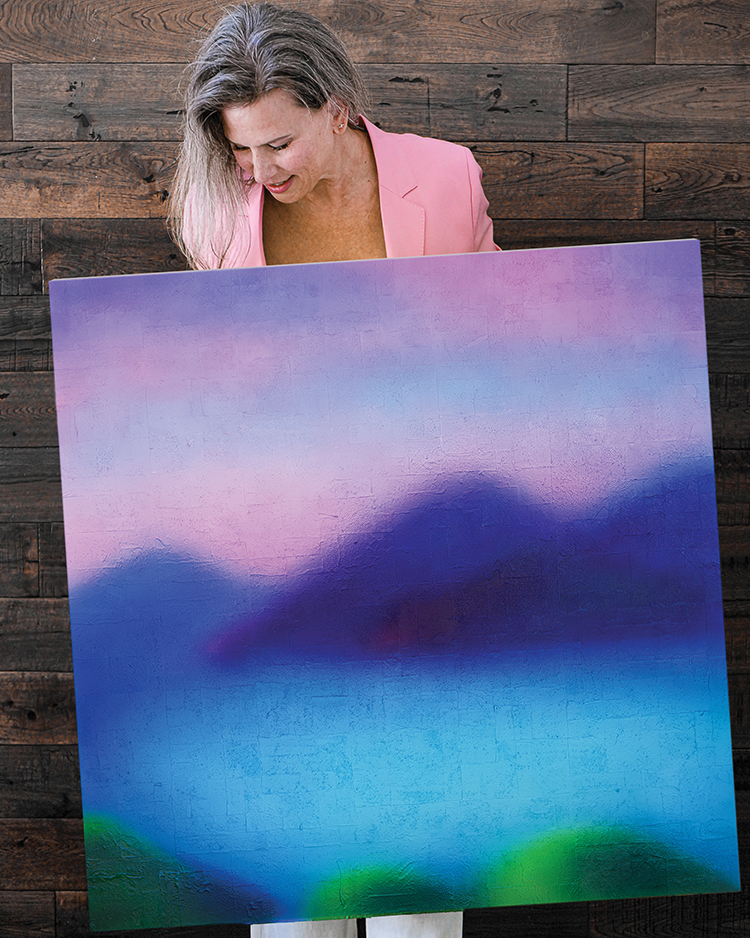
Looking ahead, I’m especially excited about bringing these pieces into larger public spaces— airports, hotels, hospitals, resorts, museums, and aquariums. Places where thousands of people move through and might be stopped in their tracks by something beautiful, only to discover that it also represents something good they didn’t know was possible.
When I stand in front of a finished piece, I see color, texture, and pattern, of course—but I also see impact: coral reefs protected, rivers more balanced, wetlands with room to recover. I see the divers, fishers, hunters, and scientists whose work intersects with mine. I see the future collector who will hang it on their wall, hopefully be moved by it every day, and share its story with friends, children, and guests.
Most of all, I see proof that solutions don’t always have to look like sacrifice. Sometimes they can look like art. Sometimes they can look like beauty. Sometimes they can look like a refuge, built out of the problem itself.