
Marlene Bennett Jones
Marlene Bennett Jones was raised on a farm in Gee’s Bend. After high school, she went on to study electronics and became an aeronautical electrician for firms like Beechcraft and Lockheed Martin. She returned to Gee’s Bend to help care for her mother, Agatha Bennett, who was ill with Alzheimer’s, and it was then that she returned to quilting. Her work is featured in museum collections from Alabama to New York to London, and she, along with Loretta Pettway Bennett, is the host of Vacation with an Artist.
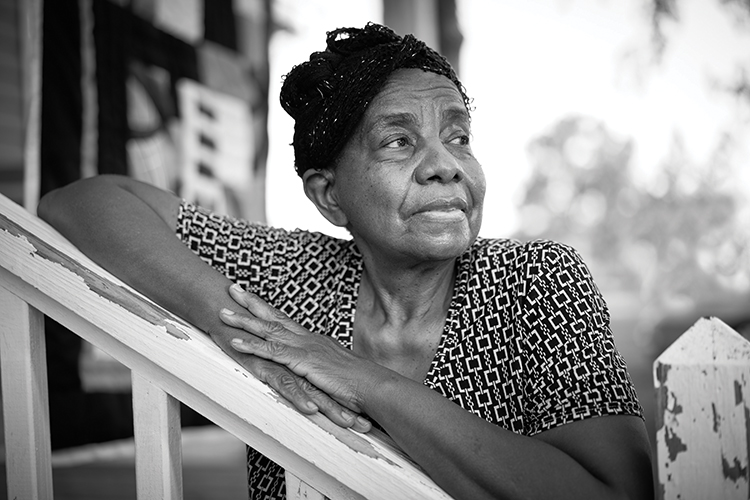
When I was a child, the women in the community would get together. After they put us on the school bus, my mother and three or four other women would meet at each other’s houses, and they would quilt. When we got home from school, they might let us mess around on the end of the quilt and try to play with it. But most of the time, we would go underneath the quilt and play. It was traditional that if you grew up in Gee’s Bend, there were certain things that you learned how to do, like quilting, cleaning the house, and taking care of your siblings. We did a lot of patching, like when pants got ripped.
After graduating from high school, there were no jobs, so we migrated North to find jobs. But if anyone would have told me that I would be picking up a needle and thread, I would have said no, that’s not Marlene. But I got involved again in the year 2000 when my mother got sick with Alzheimer’s. I remember sitting in the room with her, and she was just moving her fingers and her hands, and I didn’t know what she was doing. I asked my brother about it. He said, “Well, back in those days, they used to quilt a lot, and they used to patch.” So, I got some scrap material, anything that I could get my hands on. I laid them across the bed, and she started pressing the material out with her hands. She couldn’t really talk, but I could see it in her eyes. I saw something there. So, late at night, I would get up and go into the room with her and start piecing up quilts. And that’s how I got started.
I started with a little throw to put across her bed. The first one that I really quilted, I didn’t know what to do because back then, they used to hang the quilt from the ceiling by a rope to stretch it. But I said, Marlene, if you can help build an airplane, you should be able to come up with some kind of solution here. My father had a walker, so I got a pair of his suspenders, and I hooked them together to stretch the quilt a little bit. I couldn’t get the proper stretch that I wanted, but this is how I got started. I would just sit there all night and quilt and quilt in my mother’s bedroom, which was what we called a 12-foot room. All those houses were called Roosevelt houses. And now, to have quilts hanging in a museum, let me put it to you this way. From the cotton field to the museum, that sums it up for me.
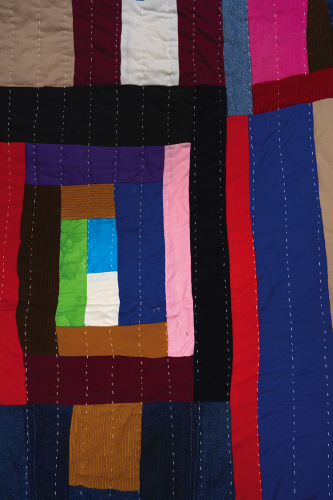
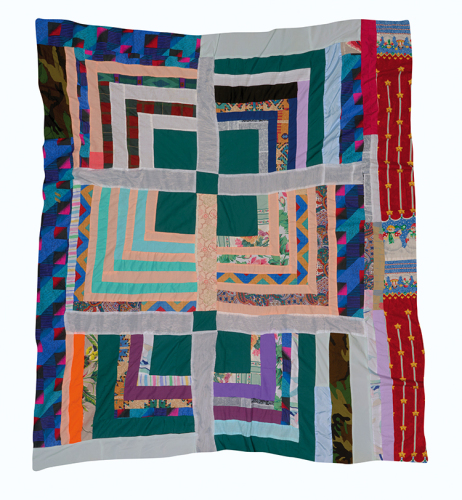
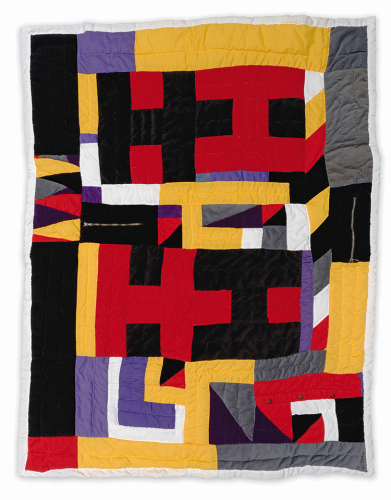
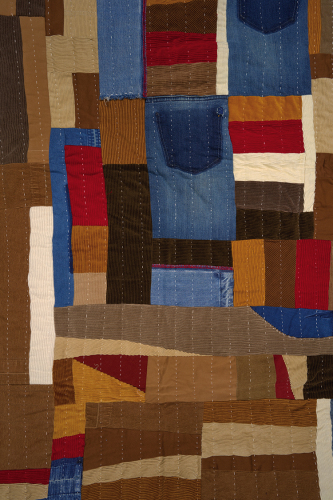
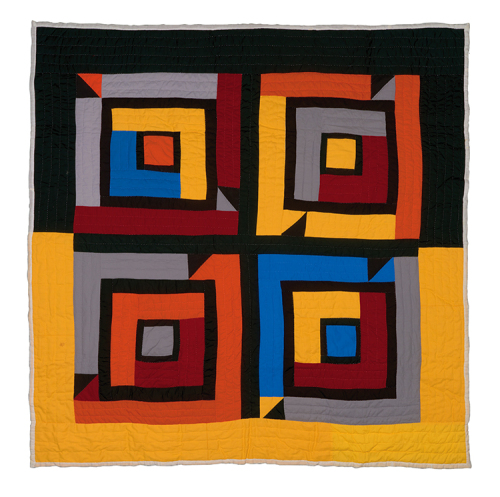
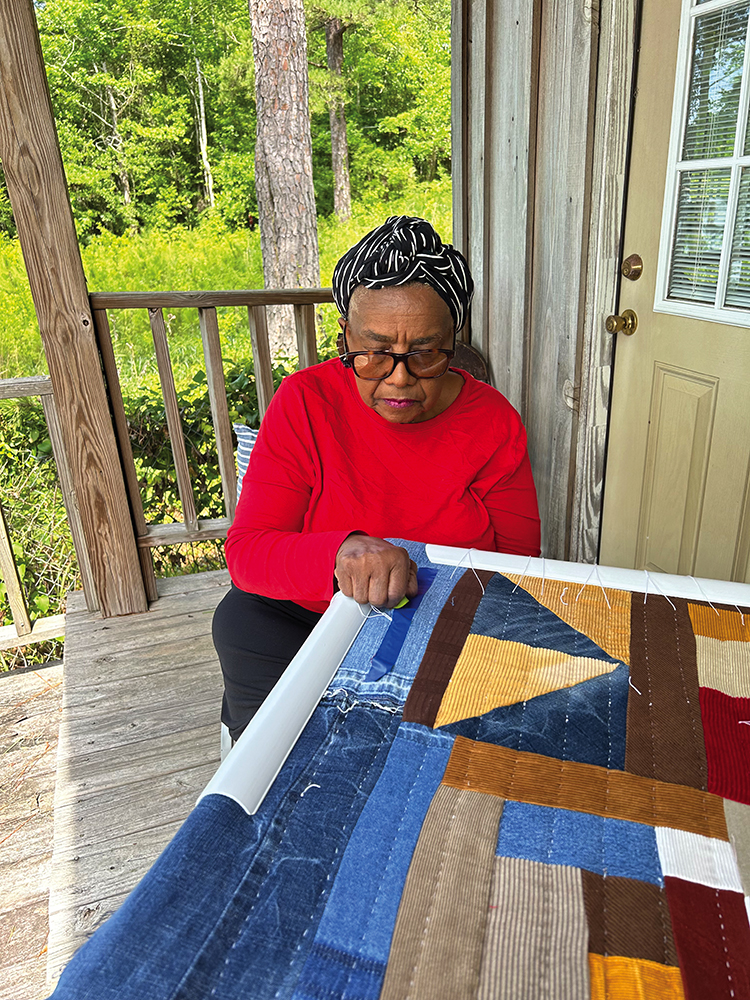
When I’m dealing with material and making a quilt, it’s like communicating with humans. I get all the colors, and I lay them out, and see who’s going to get along. And when I get to the point where they can’t come to an agreement, I have to bring a mediator in. I bring in a white piece, or a little piece of orange or red. It’s important that my pieces communicate together. If they can’t get along, I take that block and throw it in the corner. And then I go back and get all those blocks and put them together and see if they’re getting along now. One lady in Gee’s Bend told me, “Marlene, when I look at your quilt, my God, I think you’re mixed up in the head.” I guess the best artists are mixed up in the head a little bit. I think we are just weird people.
I create what’s coming out of my mind. I don’t do pattern quilts, that’s not me. I’m looking at Goodwill, Salvation Army, estate sales. When I see a pair of pants or a dress that someone has worn, I’m wondering, where has this piece been? What part of the country have they traveled? I don’t know where they came from, but wherever it is, there’s a history there.
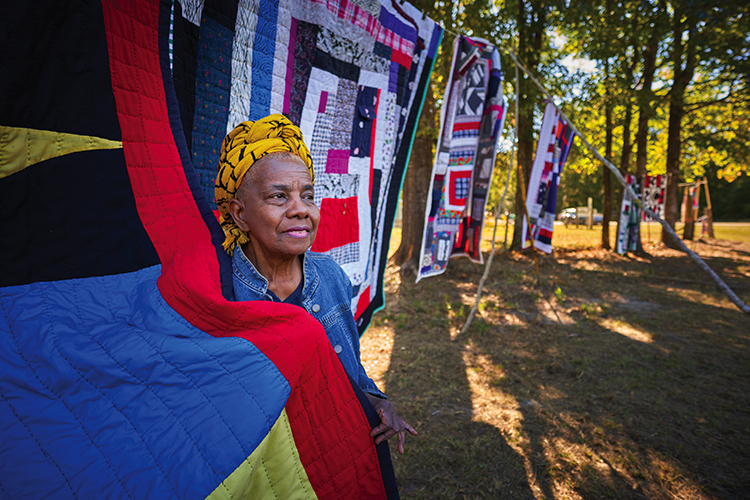
When I see a quilt hanging on the wall, I take my eyes directly to the left. And then I focus on the center. Now, if the center got my attention and the left got my attention, then the quilt got me, okay? And I noticed some of the older quilts that my parents made back then, they used old clothing, and whatever they could get. Even back then, it seemed like they knew how to make the material talk to each other, and it’s just traditional. If you came from Gee’s Bend and you figure it out, you will know a Gee’s Bend quilt.
Our quilts, they’re not symmetrical. When you see them, you can tell that we didn’t do a proper measurement on them. If someone said, “Give me a 75-by-80,” then I would do that. But one side is going to be a little bit off. So that’s another way you can tell that it’s a Gee’s Bend quilt.
There was an old commercial that was about the 3 Ps. Well, I do the 3 Ps: first, I have to have patience. I have to have the passion. And of course, I have to have pride. And those are my 3 Ps.